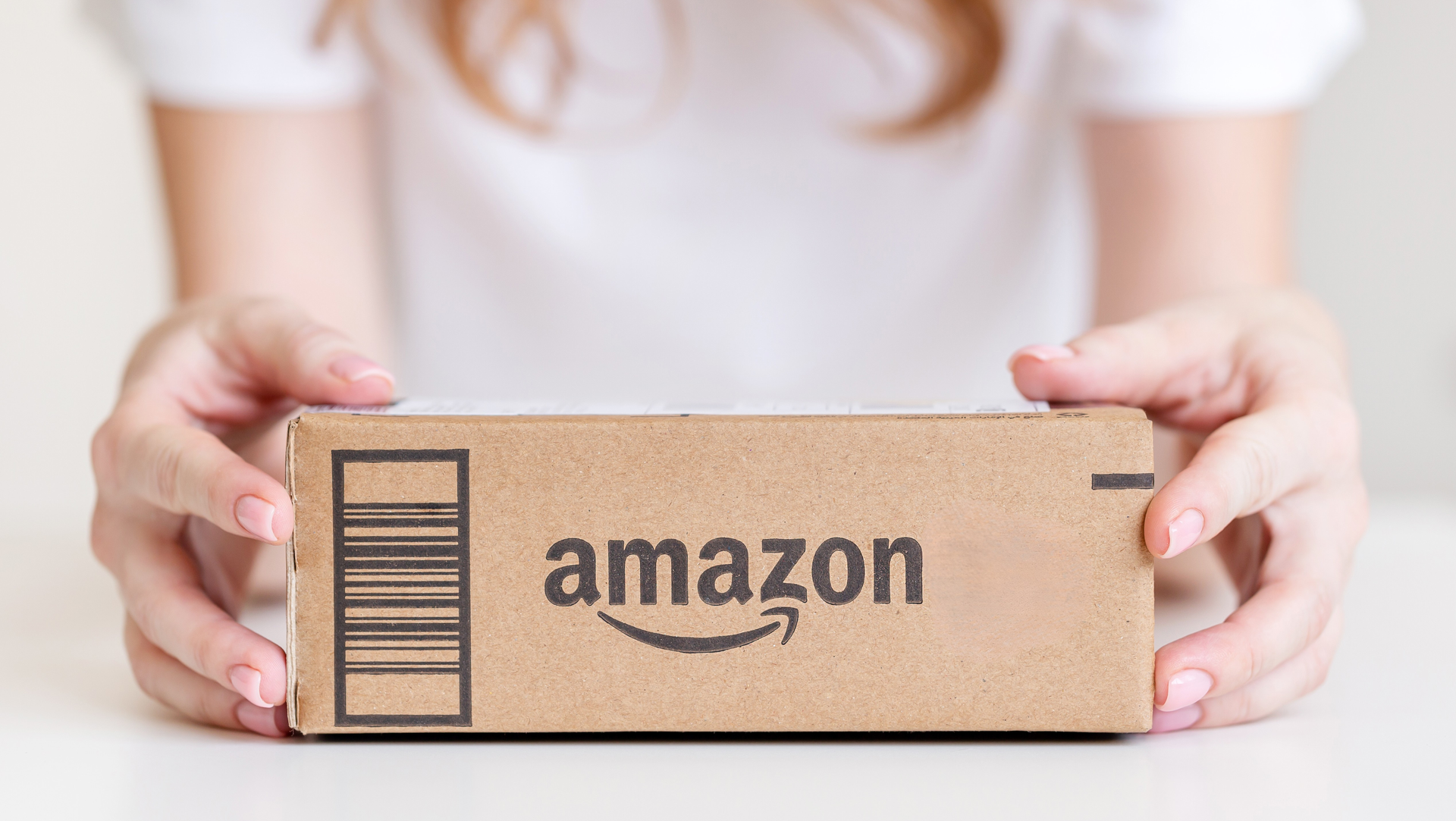
Amazon Advertising Vs Google Ads

Abhilav • March 29, 2022

Amazon Advertising Vs Google Ads: What's the difference

Setting up a pay-per-click (PPC) campaign can be an effective way to drive traffic to your website and generate leads. Choosing the right platform for your paid advertising campaigns can be a daunting task. With numerous options available, it's challenging to determine which one is best suited for your business. Amazon Advertising and Google Ads are the two most popular options. So what's the difference between them? Keep on reading to find out. 


Difference between Amazon PPC and Google Ads


Amazon PPC

 
Amazon PPC is a service that enables businesses to place ads on Amazon, increasing visibility for their products and driving traffic to their respective product pages. With Amazon PPC, businesses can target specific keywords related to their products and specify the maximum amount they're willing to pay per click (CPC). Ads are then displayed in search results and on product detail pages.


Businesses that want to use Amazon PPC must create an advertising campaign and provide a list of target keywords. They can also choose to target specific products or categories on Amazon or let Amazon's algorithm automatically select relevant keywords for them. Amazon PPC enables sellers to bid on keywords, allowing their products to be displayed when customers search on Amazon.com. When a customer clicks on one of your ads, you pay Amazon a fee based on the amount you bid. You can target your ads by customer demographics, such as age and gender, interests, or product categories. You can also target customers based on what they've recently viewed on Amazon.com.


Features of Amazon PPC


  • You can reach a large audience of potential customers on the world’s largest online marketplace. 
  • Amazon PPC can be an effective way to drive traffic to your product listings and boost sales. 
  • Ads on Amazon are highly targeted, so you can spend your advertising budget more efficiently and effectively reach consumers who are likely to be interested in your products or services. 
  • You can track the performance of your ads and adjust your bids accordingly to maximise your ROI (return on investment).

 
Google Ads

 
Google Ads is a pay-per-click advertising program that allows businesses to place ads on Google and its partner sites. Ads are placed based on keywords related to the business, and when someone clicks on the ad, the business pays Google a designated fee. Google Ads are placed in response to specific searches and are targeted to users based on their interests and browsing history. 


Advertisers using Google Ads can create text-based ads or use Google's ‘Dynamic Search Ads’, which automatically create an ad based on the content of a business's website. Advertisers also have the option of targeting their ads by location, language, device type, and more. Google Ads can be an effective way to reach new customers, and businesses should consider utilising them if they want to expand their online presence.


Features of Google Ads


  • With Google Ads, you can target potential customers specifically based on their location, interests, and the type of device they use. 
  • Google Ads is very flexible, allowing you to adjust your budget and bid amount daily. This allows you to stay within your desired spending range while maximising the effectiveness of your ad campaigns.
  • Additionally, Google Ads enables you to track your results, allowing you to see exactly how effective your campaigns are. 

 
The key metrics both Amazon PPC and Google Ads provide include


  • Impressions: The number of times your audience has seen your ad.
  • CTR (Click-Through-Rate): The percentage of people who click on your ad out of the total number of people who see it.
  • CPC (Cost-Per-Click): How much you pay, on average, for each person who clicks on your ad. 
  • Conversions: The number of people who take the desired action after clicking on your ad, such as making a purchase or signing up for a newsletter.
  • Your ACoS (Advertising Cost of Sale): ACoS is the percentage of your ad spend compared to the sales generated from those ads


Each metric is crucial in understanding how your PPC campaign is performing and where you can make improvements. For example, a high CPC may mean that you need to adjust your bids, while a low CTR could indicate that your ad needs to be more relevant to what people are searching for. By understanding these metrics, you can fine-tune your campaigns to be more effective and successful.


Key differences between Amazon PPC and Google Ads 


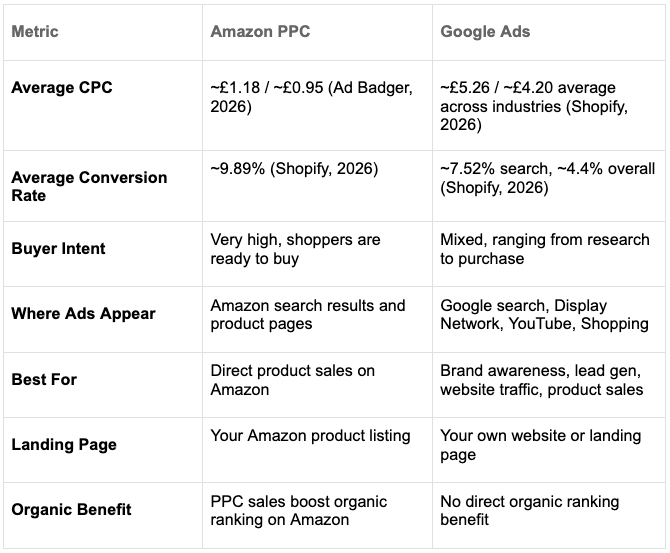
  • Google Ads is geared more towards general search traffic, whereas Amazon PPC is specifically geared towards product searches. 
  • The Cost-Per-Click on Amazon is generally lower than on Google Ads. Amazon PPC allows you to bid on keywords that are not currently being used by other advertisers, giving you a potential competitive advantage.
  • Google Ads focuses on keyword-based advertising, whereas Amazon PPC focuses on product-based advertising. This means that you'll need to approach your campaigns differently depending on which platform you're using. 
  • Google Ads has a wider reach than Amazon PPC, enabling you to target a larger audience with your campaigns. 
  • Google Ads is typically more expensive than Amazon PPC, so you'll need to be prepared to spend more money on your campaigns if you want to use this platform.


Once you have a good understanding of the two platforms, you can make an informed decision about which platform will work best for your business. Both Amazon PPC and Google Ads offer significant opportunities for businesses to reach new customers, but each has its unique benefits. So, which platform should you choose? The answer depends on your business’s individual needs. If you want to advertise your products on Amazon only, then Amazon PPC is the one to choose, and if you want to advertise your products on Google, or any other website for that matter, then Google Ads will help you get the most out of your marketing efforts. 


If you’re looking for an experienced team of professionals to help manage your Amazon marketing campaigns, as an 
Amazon PPC Agency, you can contact us directly. We would be happy to discuss our services with you and help you find the most effective way to reach your target audience. 


We’re experts in all things Amazon marketing and would be happy to help you set up a successful campaign. 
Contact us today for more information!

Two people looking at a laptop, pointing at the screen. Office setting, logo in background.
By Paid Ads December 17, 2025
Discover how the KangarooUK team delivers elite marketing power for less cost. Fair dinkum value for SMEs. Call us on 01530 560177 for a chat today!
Two men reviewing a computer screen in an office; one points, smiling.
By Peter Jones November 20, 2025
If you've ever felt the friction in a sales call when the topic turns to price, you're not alone. In the digital agency world, we're not just selling a product; we're selling a complex, high-value service.  How we package that service financially can be the single biggest factor in either building a partnership or hitting a brick wall. There isn't a single, one-size-fits-all approach. The truth is, the "best" model is the one that prioritises the client's immediate needs first, paving the way for a long-term, successful relationship. But this isn't just about how you price your services to your end-client. It's about the very structure of your agency. We see it all the time: talented WordPress agencies who are structured to only handle huge website builds, forcing them to turn away smaller, high-potential clients. We speak with exceptional branding agencies that want to offer a holistic service but find that building and supporting websites distract from their core expertise. This is where rigidity in your business model, not just your sales process, can cost you a perfect-fit client. The "Partnership-First" Approach to Pricing At KangarooUK , we’ve found that true success comes from seeing pricing not as a barrier, but as the first opportunity to build trust. This philosophy operates on two levels: For Direct Clients: Tailoring the payment model to demonstrate we are a partner invested in their success, not just a one-off provider. For Agency Partners: Acting as a specialist partner to help them say "yes" to more opportunities, capturing revenue they would otherwise have to refuse. Let's break down the flexible models that build better relationships on both fronts. Part 1: Flexible Models for Your Direct Clients First, let's examine the client-facing models, even if you plan to outsource the build. Offering these options positions you as a strategic consultant. 1. The Classic: Upfront Project Fees (with a twist) This is the traditional model: the client pays for the website build as a defined project. The Risk: A 100% upfront fee is a deal-breaker for many SMEs with tight cash flow. It can also frame the relationship as purely transactional. The project ends, you hand over the keys, and the partnership struggles to evolve into an ongoing retainer. The Smart-Flex: This is where milestone payments shine. For example, a 50% deposit to secure the project and commence design, with the final 50% balance due just before the new, conversion-driven website goes live. This is a powerful trust-builder. 2. The Relationship-Builder: The 12-Month Split Another highly effective, customer-centric model is splitting the website build cost over 12 months. This model is a game-changer for clients who need to manage their budgets predictably. It transforms a large, daunting capital expense (CAPEX) into a manageable monthly operational expense (OPEX). It’s flexible, predictable, and deeply appreciated by businesses that need to align their outgoings with their revenue. For the agency, it secures a 12-month commitment, naturally opening the door to bundling ongoing marketing retainers. 3. The All-In Partner: "Free" Site + Marketing Retainer This model takes the 12-month split a step further, rolling the entire cost of the build into a 24 or 36-month marketing retainer, presenting the website itself as "free." This is the ultimate low-barrier-to-entry model, powerfully attractive to new businesses. It positions you as a long-term partner from day one and secures predictable, long-term Monthly Recurring Revenue (MRR). Part 2: The Ultimate Flexibility: The Agency-to-Agency Partnership The models above are great, but what if the project itself doesn't align with your agency's needs? What about the client who needs a site, but your minimum project fee is too high? Or the client who needs a fast, scalable site on a platform you don't specialise in? This is where true flexibility wins. Instead of saying "no," you say, "Yes, we can handle that." As the UK’s only Duda Expert & Solution Partner, KangarooUK is built to be this partner for you. We work with clients, agencies, SaaS providers, and trade associations to deliver powerful websites and advanced functionality, allowing you to scale your services without the overhead. Here’s how a partnership model enables you to perform at scale: 1. White-Label Duda Development You can offer our services under your own name. We provide fully White-Label Duda Development in your own environment and brand, enabling you to expand services, clear backlogs, or roll out hundreds of client sites discreetly. With NDAs and silent partnerships, you keep full client ownership while we provide the technical power. This is the perfect solution for branding agencies that want to offer top-tier web design without an in-house development team. 2. Seamless Migrations to a Better Platform Many clients are stuck on slow, insecure, or hard-to-manage platforms like WordPress, Wix, or Mono. A partnership allows you to offer a high-value migration service. We migrate websites to Duda with minimal disruption, whether it's one site or thousands. Every migration is SEO-conscious, ensuring your client keeps their rankings while gaining a faster, safer, and more reliable platform—which you can then manage for them on a retainer. 3. Unlock Enterprise-Grade Tools Our Custom Plan Enablement Platform gives your agency access to Duda’s most powerful features—normally reserved for enterprise plans. You can integrate external datasets, manage an unlimited number of team members, and provide clients with a fully white-labelled environment featuring SSO and API access. This allows you to compete at an enterprise level without the enterprise overhead. 4. Advanced & Custom Solutions on Demand What about the client who needs a custom price calculator, a complex API integration, or even a mobile app? You don't need to build a new department. We handle the heavy lifting. Our team delivers secure, scalable solutions—from custom widgets to database solutions and mobile app builds—that work seamlessly for your client, under your brand. How to Choose the Right Model The secret isn't having a rigid price list. It's using your discovery phase as a diagnostic tool. When you get to the budget conversation, you're not a salesperson; you're a solutions consultant. Ask the right questions: "What's your current budget, and how flexible is it?" "Are there any financial deadlines or fiscal-year considerations we need to be aware of?" "What's more comfortable for your cash flow: a one-off project investment or a predictable monthly cost?" "Are you looking for a long-term partner to help you grow?" And most importantly, ask yourself: "Is this project a perfect fit for my core team, or could I deliver a better, more profitable result for both my client and my agency by using a specialist partner?" The Key Takeaway Being customer-centric and transparent about pricing isn’t just good for clients—it’s essential for agency health. When you tailor your approach, you build immediate trust. But true, sustainable flexibility comes from having the right partners in your corner. It allows you to offer flexible pricing (like the 12-month split) on a platform built for speed and reliability. It allows you to say "yes" to projects your old model would have forced you to refuse. At the end of the day, it’s not about which model is “right” in theory. It’s about which model—and which partner—solves the client’s entire problem.
Stack of coins on top of a financial chart, with a loose coin on the bottom right.
By Peter Jones October 29, 2025
Discover how we achieved explosive growth for our clients during the Prime Big Deal Days 2025.
Screenshot of a performance dashboard showing website clicks, impressions, CTR, and position.
By Devanshi September 26, 2025
In October 2025, Google will update its Google Ads Misrepresentation Policy, specifically targeting dishonest pricing practices.
Show More