

Amazon PPC vs Google Ads: Which Should You Use?
Last Updated: May 2026
Amazon PPC and Google Ads are both pay-per-click advertising platforms, but they work in fundamentally different ways. Amazon PPC targets shoppers who are already on Amazon, looking to buy a product. Google Ads targets people searching for information, products, or services across the entire web. The right choice depends on what you sell, where your customers are, and what you are trying to achieve. For most e-commerce businesses, the answer is not one or the other; it is both, used strategically together.
What Is the Core Difference Between Amazon PPC and Google Ads?
The fundamental difference is buyer intent. When someone searches on Amazon, they are almost always looking to buy something. They have their wallet out. When someone searches on Google, they could be researching, comparing, browsing, or buying. The intent is much broader.
This difference affects everything: your click-through rates, your conversion rates, your cost per acquisition, and how you measure success. Amazon PPC is a bottom-of-funnel channel. Google Ads covers the entire funnel, from awareness through to purchase.
How Do They Compare on Key Metrics?
Here is a side-by-side comparison based on current industry benchmarks:
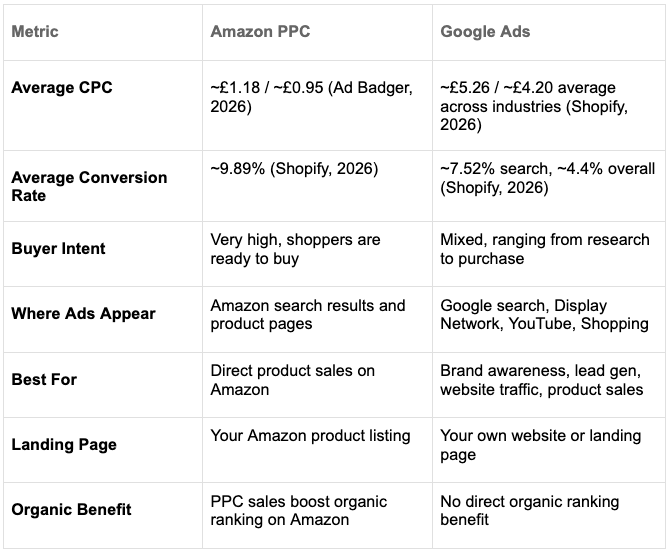
The numbers tell an interesting story. Amazon PPC has a significantly lower average CPC and a higher conversion rate than Google Ads. That is because Amazon shoppers are further down the buying journey. They have already decided they want a product; they are just choosing which one.
When Should I Use Amazon PPC?
If your products are listed on Amazon and you want more people to see them, Amazon PPC is where to start. You are paying to appear in the search results alongside your competitors, right at the moment a shopper is deciding which product to buy.
What makes Amazon PPC particularly powerful is how it feeds into the Amazon flywheel. Every sale your ads produce counts towards your organic ranking. More sales mean a higher ranking, which means more free traffic, which means more sales without paying for them. Google Ads does not have this compounding effect because Google's organic search rankings are not influenced by your ad spend.
For a detailed walkthrough on setting up Amazon campaigns, see our Amazon PPC guide.
When Should I Use Google Ads?
Google Ads works best when your goal is getting people onto your own website, getting your brand name in front of new audiences, or catching potential buyers while they are still in the research phase, before they have even opened Amazon.
Google Ads also gives you access to formats that Amazon does not offer. Google Shopping ads show your products with images and prices directly in search results. YouTube ads let you run video campaigns to build brand recognition. The Google Display Network puts banner ads across millions of websites. These are all awareness and consideration tools that Amazon simply does not replicate.
Google Ads is also the only option if you run a service-based business. A plumber, a solicitor, or a marketing agency has no use for Amazon PPC because their customers are searching on Google, not browsing Amazon.
Should I Run Amazon PPC and Google Ads Together?
For most e-commerce businesses selling on Amazon alongside their own website, the answer is yes. The two platforms serve different parts of the customer journey and complement each other well.
A typical combined strategy looks like this: Google Ads drives brand awareness and sends traffic to your own website, where margins are higher. Amazon PPC captures shoppers who go straight to Amazon to search and buy. Google Shopping ads catch people comparing products across retailers. Together, they cover more of the market than either platform alone.
We have seen clients at Kangaroo UK who ran only Amazon PPC, missing a significant share of potential customers who search on Google first. Adding Google Ads alongside their Amazon campaigns increased their overall sales by capturing buyers earlier in the research phase.
How Should I Split My Budget Between Them?
There is no universal split because it depends on your business model. But here are some general guidelines based on what we see working for our clients:
If Amazon is your primary sales channel: allocate 60-70% of your ad budget to Amazon PPC and 30-40% to Google Ads. Amazon PPC drives direct sales with higher conversion rates, and Google Ads builds the brand awareness that feeds into Amazon searches.
If your own website is your primary channel: flip the ratio. Put 60-70% into Google Ads to drive website traffic and conversions, and allocate 30-40% to Amazon PPC to capture marketplace buyers you would otherwise miss.
If you are launching a new product, lean heavily into Amazon PPC initially to build sales velocity, reviews, and organic ranking. Once the product has momentum, layer in Google Ads to expand your reach beyond Amazon.
The key is to track performance on each platform separately and adjust your split based on where you are getting the best return. A pound spent on Amazon PPC might generate £4 in revenue, while the same pound on Google Ads generates £3 but also builds brand recognition that drives future Amazon sales. Both numbers matter.
What Are the Common Mistakes When Running Both?
The biggest mistake we see is treating the two platforms as separate, unconnected strategies. They work best when managed as part of a single advertising plan with shared goals, shared data, and coordinated timing.
Other common mistakes include running Google Ads traffic to a poorly optimised website while expecting Amazon-level conversion rates, not tracking the indirect impact of Google brand campaigns on Amazon search volume, and spreading the budget too thin across both platforms instead of focusing spend where the data shows the best returns.
How Can Kangaroo UK Help?
We manage both Amazon PPC and Google Ads for e-commerce clients, enabling us to coordinate strategy across both platforms. Our Amazon account management team handles Amazon PPC alongside listing optimisation, while our PPC management services team runs Google Ads, Google Shopping, and paid social campaigns.
Having both under one roof means we can see the full picture, share data between platforms, and allocate your budget where it delivers the best results. You do not need two separate agencies pulling in different directions.
Not sure where to spend your advertising budget?
Our team manages Amazon PPC and Google Ads under one roof. We will review your current setup and recommend
the right strategy for your business. Book a free advertising review or call us on 01530 560177.
Author
Abhilav Vishwakarma, Amazon Marketplace Leader, Abhilav leads the Amazon team at Kangaroo UK, managing Seller and Vendor Central accounts for brands across the UK. He works alongside the wider PPC team to coordinate advertising strategy across Amazon and Google for e-commerce clients.